24 X 7 online support

indiaurolift@gmail.com

Contact Us

+91-9815978530, +91-7999634444 ,
+91 - 7999632222

About UroLift

About UroLift System

The UroLift System offers a unique method for treating BPH by gently lifting and securing the enlarged prostate tissue, keeping it out of the way so it no longer obstructs the urethra.

Unlike other transurethral BPH treatments, it requires no ongoing medication, heating, cutting, or removal of prostate tissue.

A UroLift System procedure typically takes less than an hour and allows for future UroLift, TURP, or laser treatments if needed.

Proven Clinical Results of the UroLift System

Faster Recovery. Minimal Risks. Reliable, Proven results.

The Prostatic Urethral Lift (PUL) procedure (using the UroLift System) is recommended for the treatment of BPH in both the American Urological Association and European Association of Urology clinical guidelines.

Quick Relief & Fast Recovery

Minimally Invasive

Long-Lasting Results

Preserves Sexual Function

UroLift System Components

The UroLift System is comprised of two main components.

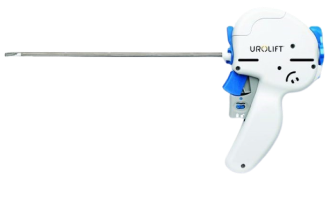
UroLift® Delivery Device

The device is inserted through the urethra using a rigid sheath under cystoscopic guidance to precisely access the obstructed area. Each delivery device is preloaded with one UroLift® Implant.

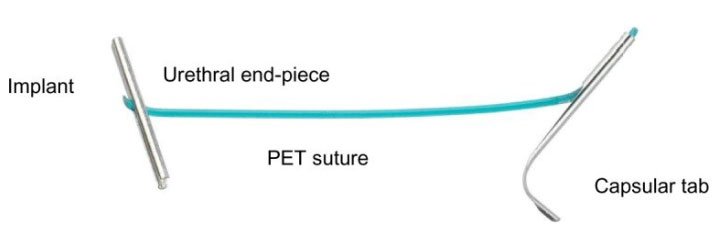
UroLift® Implant

The UroLift® Implants are small, permanent devices that hold the enlarged prostate lobes apart once deployed by the delivery system. Each implant is composed of commonly used implant-grade materials such as nitinol, stainless steel, and PET suture.

MRI Information

Non-clinical testing has confirmed that the UroLift Implant is MR Conditional.

Patients with the UroLift Implant may safely undergo MRI scans immediately after placement, provided the following conditions are met:

  • Static magnetic field strength of 3.0 Tesla or less

  • Maximum spatial field gradient of 1,500 Gauss/cm (15 T/m) (extrapolated)

  • Maximum whole-body averaged specific absorption rate (SAR) of 4 W/kg for up to 15 minutes per scanning sequence (First Level Controlled Operating Mode)

  • Under these conditions, the UroLift Implant is expected to cause a maximum temperature increase of 2.4 °C after 15 minutes of continuous scanning.

    In non-clinical testing, MRI image artifact from the UroLift Implant extended approximately 15 mm from the device when scanned with a gradient echo pulse sequence on a 3.0 Tesla system.

    The delivery system has not been evaluated for safety in an MRI environment and therefore must not be used during MRI scanning.

    Patients receive implant cards to indicate that the UroLift Implant is MR Conditional and may only be scanned under the specified MRI conditions.

Patient Experience